Introduction
Brake fluid is a hydraulic fluid that allows your vehicle to stop safely when you press the pedal. In humid environments like Miami, this fluid is susceptible to contamination, which can directly impact your braking performance and safety.
Signs of Brake Fluid Issues
Common signs include:
• A “Spongy” Pedal: The brake pedal feels soft or sinks further than usual.
• Discolored Fluid: Fresh fluid is nearly clear or light yellow; old fluid looks dark brown or black.
• Warning Lights: The brake dashboard light or ABS light stays illuminated.
Effects of Moisture Contamination
Brake fluid is “hygroscopic,” meaning it absorbs moisture from the air. In South Florida’s humidity:
• Lower Boiling Point: Absorbed water lowers the fluid’s boiling point, which can cause “brake fade” during heavy use.
• Internal Corrosion: Moisture can cause rust to form inside the brake lines, calipers, and master cylinder.
• Reduced Stopping Power: Air bubbles created by heated moisture can make it harder to stop the car quickly.
Inspecting the Fluid
Drivers can inspect their brake fluid by:
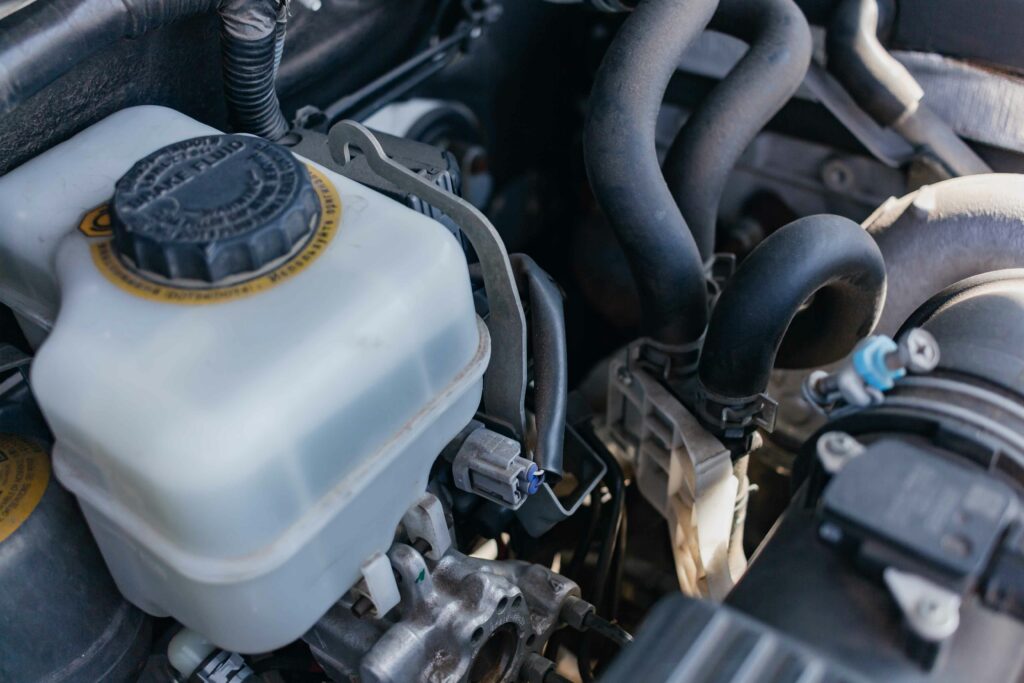
• Locating the Reservoir: Usually found under the hood on the driver’s side near the firewall.
• Checking Levels: Ensure the fluid is between the “Minimum” and “Maximum” lines on the translucent tank.
• Observing Clarity: If the fluid is dark or cloudy, it is likely time for a flush.
Conclusion
Regularly checking and flushing your brake fluid ensures your braking system remains responsive and protects expensive mechanical parts from rust and failure.
Related Guides: