Content:
Introduction
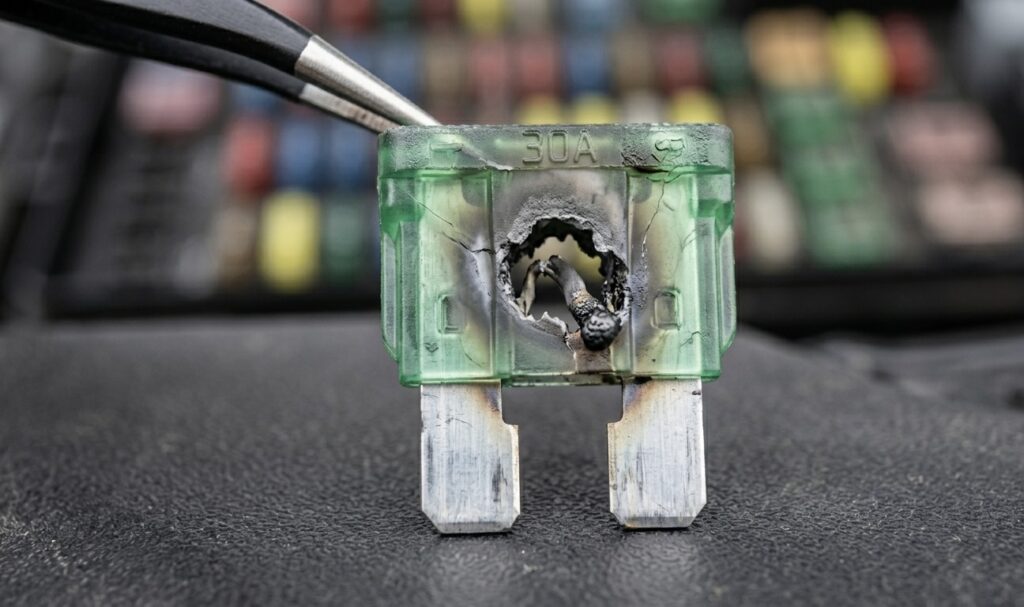
Replacing a blown fuse with a higher amp fuse may seem like a quick fix, but it can create serious electrical and safety problems.
⸻
What Does a Fuse Do?
A fuse protects your car’s electrical system by breaking the circuit if too much current flows through it.
Each fuse is designed for a specific amperage.
⸻
Why a Higher Amp Fuse Is Dangerous
Using a higher amp fuse can:
- Overheat wiring
- Damage electrical components
- Increase the risk of electrical fires
The fuse may no longer protect the circuit properly.
⸻
Why Fuses Blow in the First Place
Common causes include:
- Electrical shorts
- Faulty components
- Overloaded circuits
- Water damage
Replacing the fuse without fixing the real problem may cause it to blow again.
⸻
What You Should Do Instead
- Always replace the fuse with the same amp rating
- Check the owner’s manual for the correct size
- Inspect for underlying electrical problems
⸻
Miami Driving Considerations
Humidity and water exposure can sometimes contribute to electrical issues and corrosion in older vehicles.
⸻
Conclusion
Replacing a blown fuse with a higher amp fuse can be dangerous and may damage your car’s electrical system. Always use the correct fuse rating to protect your vehicle safely.
Related Guides:
What is a Fuse Tester, and Why is it Better Than a Visual Inspection?