Introduction
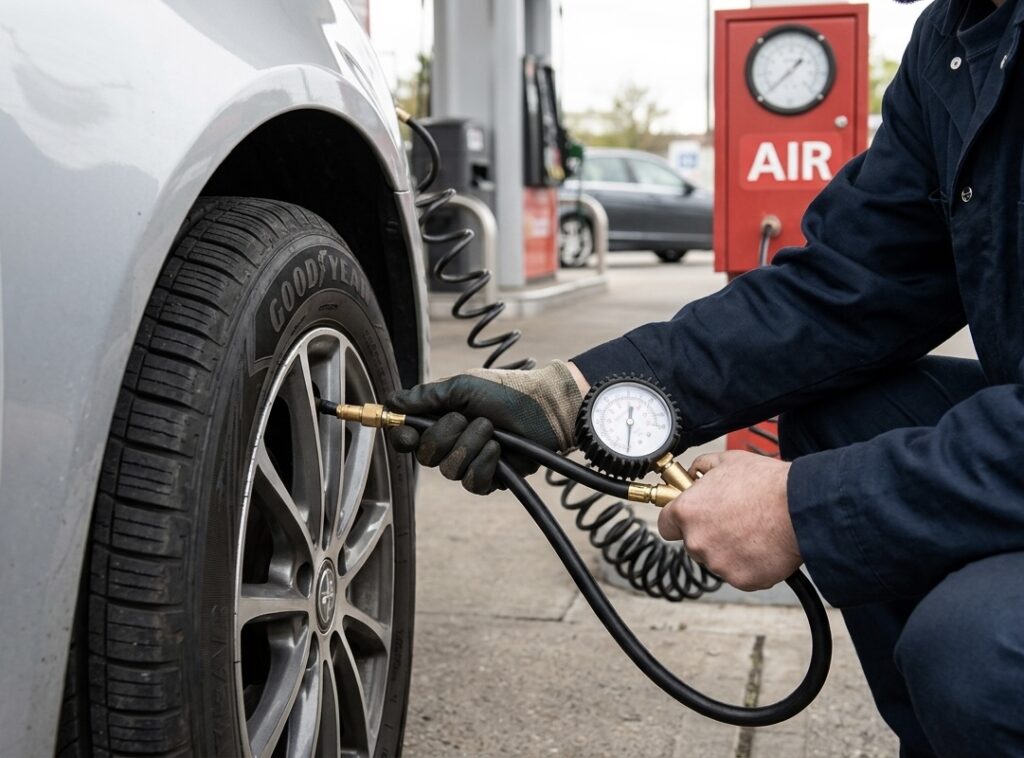
Proper tire pressure is important for both safety and fuel efficiency. Tires that are over-inflated or under-inflated can negatively affect vehicle performance.
Under-Inflated Tires and Fuel Economy
Under-inflated tires create more rolling resistance. This forces the engine to work harder and can reduce fuel efficiency.
Low tire pressure is one of the most common causes of reduced gas mileage.
Over-Inflated Tires
Over-inflated tires can slightly reduce rolling resistance, but they may also reduce traction and cause uneven tire wear.
Excessive pressure can make the ride harsher and increase the risk of tire damage.
Recommended Tire Pressure
Drivers should always follow the tire pressure recommended by the vehicle manufacturer.
This information is typically found on a sticker inside the driver’s door frame.
Benefits of Proper Tire Pressure
Maintaining correct tire pressure helps:
- Improve fuel economy
- Extend tire lifespan
- Maintain safe handling
Conclusion
Both over-inflation and under-inflation can cause problems, but under-inflated tires usually have the greatest negative impact on fuel efficiency.
Related Guides: